Military space acquisition
Rocket Lab’s $397m Flatellite award spans satellites, Neutron launch and operations
The Space Force deal covers multiple spacecraft and includes an option for more, but the number of Flatellites, Neutron flights and launch dates remain undisclosed. SB-AMTI’s later operational capability depends on programme-wide sensing, processing and orchestration work.
Add us as a preferred source on Google Add us as a preferred source on Google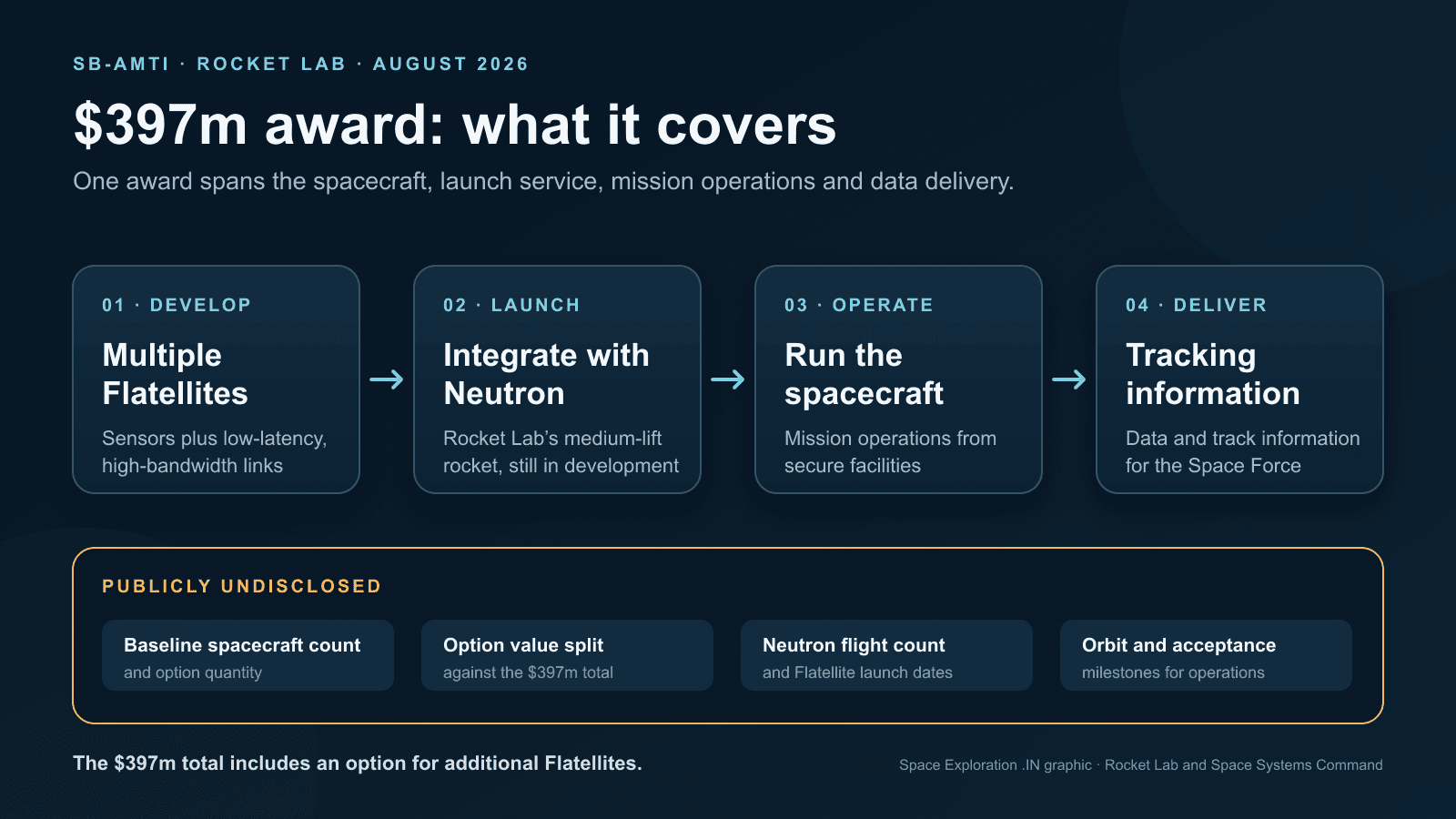
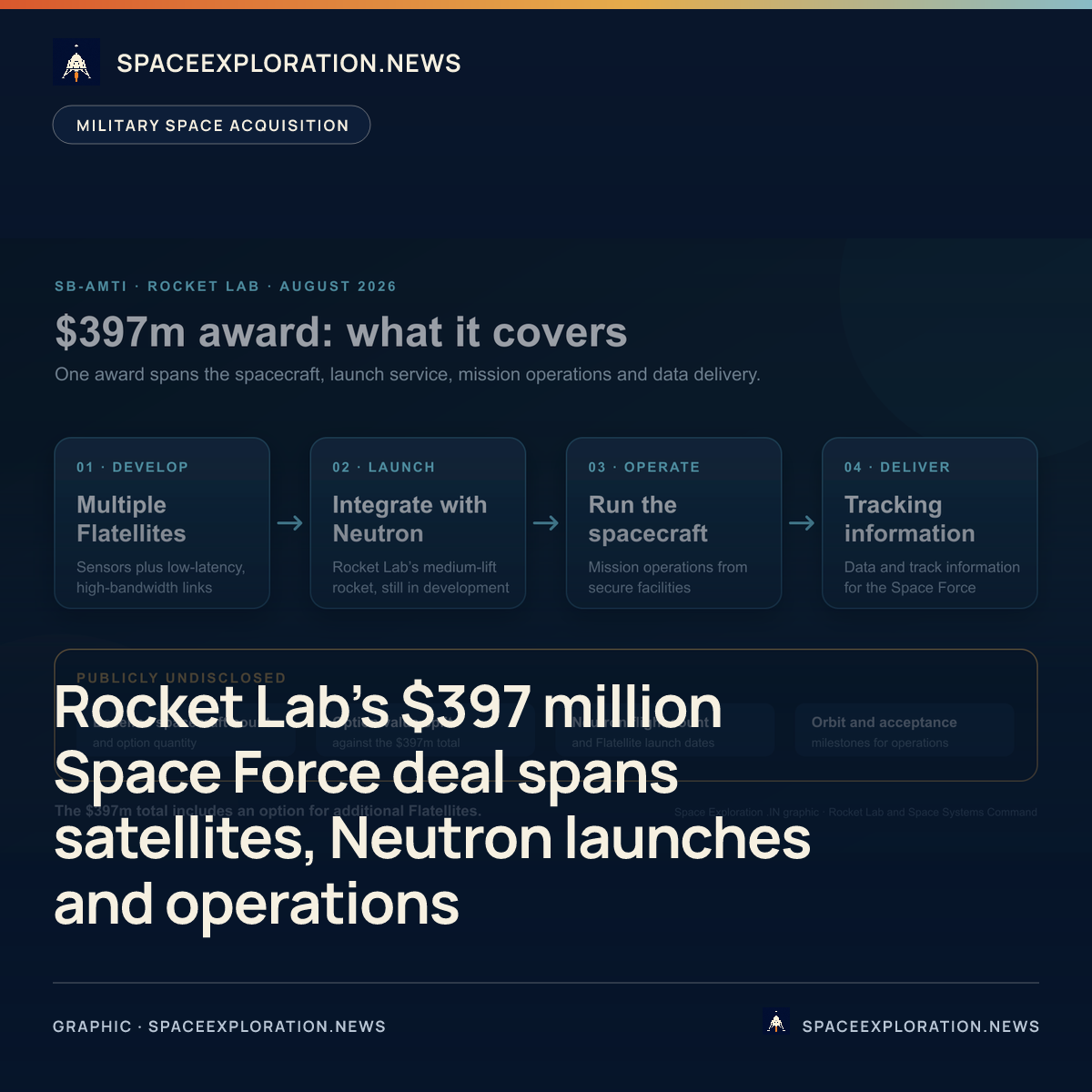
Rocket Lab’s $397 million U.S. Space Force award covers an end-to-end package: developing multiple Flatellite spacecraft, launching them on Neutron, operating them from secure facilities and providing data and track information to the service. Those are contract commitments disclosed by the company. The announcement does not say any of the spacecraft has been built or launched under the award, and it reports no operational tracking result.
The headline value also includes an option for additional Flatellites. Rocket Lab has not separated the value or quantity of that option from the initial work, so the public record does not establish how much of the $397 million is firm or how many spacecraft are in the baseline order. Space Systems Command disclosed only that Rocket Lab’s agreement sits within three fixed-price Other Transaction Authority agreements worth $615 million in all.
What the award buys
Flatellite is Rocket Lab’s low-profile, stackable spacecraft platform, introduced in February 2025 for high-volume constellation production. Rocket Lab says the design can incorporate its propulsion, flight software, avionics, reaction wheels, star trackers, separation system, solar arrays, radios, composite structures and fuel tanks. The common platform is meant to carry different mission payloads; the company’s product description is not a specification for the Space Force vehicles.
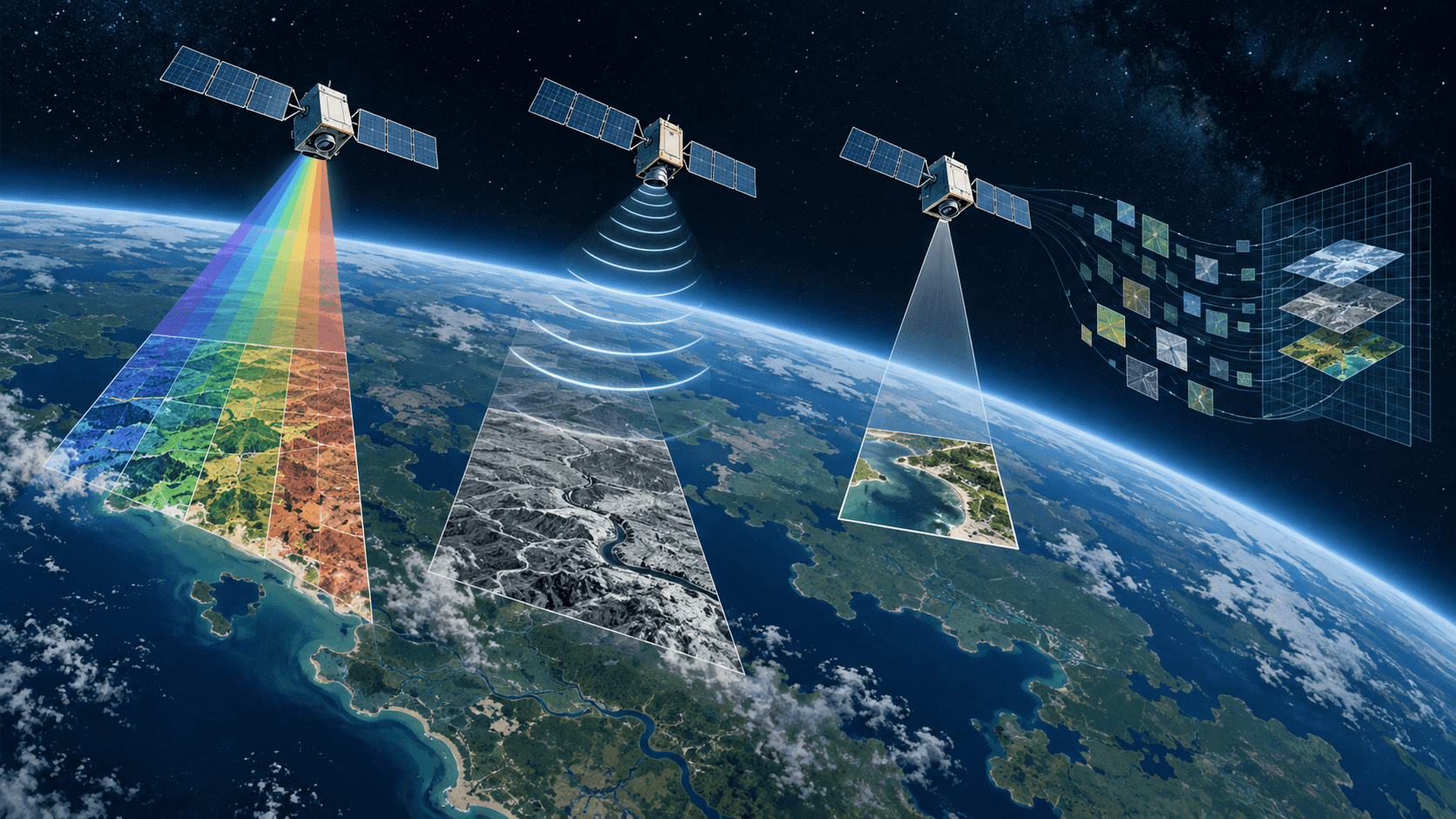
For SB-AMTI, Rocket Lab has disclosed only that the spacecraft will carry space-based sensors and low-latency, high-bandwidth communications links. It has not identified the sensing method, payload supplier, spacecraft mass, power, orbital altitude or planned service life. Space Systems Command says its broader programme is deliberately testing different sensing technologies and phenomenologies, making the missing vehicle-level detail material to any comparison among vendors.
The company’s responsibility continues after the hardware leaves the factory. Rocket Lab says it will integrate the Flatellites with Neutron, launch them, operate them from secure facilities and pass data and track information to the Space Force. That makes spacecraft production, launch service and mission operations part of one award. The public releases do not state the operating period, data-acceptance standard or point at which the government would treat Rocket Lab’s contribution as operational.
Rocket Lab describes the Flatellite’s shape as a way to stack more vehicles inside a fairing and deploy more per mission. That design intent does not reveal the contracted fleet or launch count. Neither Rocket Lab nor the Space Force has said how many Flatellites are in the initial order, how many could be added under the option, or how many spacecraft a Neutron mission would carry for SB-AMTI.
Why Neutron is a separate delivery risk
Neutron, rather than Rocket Lab’s operational Electron rocket, is the announced launcher. In its August 10 quarterly update, Rocket Lab said production of the first-stage tank was aligned with a target to deliver Neutron to the launch pad in the fourth quarter of 2026. Space.com reported on August 14 that the first flight was expected in late 2026 or early 2027. Neither marker is a Flatellite launch date, and Neutron had not yet flown.
Rocket Lab’s award release refers to a Neutron launch service but gives no flight count, launch site, deployment sequence or schedule. It also provides no contingency if the rocket’s debut or certification slips. The company classifies the launch schedule, Flatellite delivery and SB-AMTI deployment statements in its release as forward-looking, explicitly warning that actual results may differ.
The absence of a mission date matters because the contract combines a new satellite platform with a rocket still in development. It does not invalidate the award, but it sets the evidence needed before treating the announced scope as delivered: completed Flatellite hardware, a mission assignment, a successful Neutron flight, deployment, on-orbit checkout and accepted tracking data. None of those programme milestones was reported in the August announcements.
How the award fits the wider programme
Space Systems Command describes the August awards as the second task order in its Space-Based Airborne Moving Target Indicator programme. The three recipients are Rocket Lab, STR and a third company withheld for operational-security reasons. The command says the work is intended to mature emerging technologies, broaden the vendor base and integrate different sensing approaches. Rocket Lab’s $397 million agreement is therefore one supplier’s piece of a wider acquisition, not the complete SB-AMTI architecture.
The programme aims to move part of a mission long performed by ground radars and aircraft into orbit: detecting and tracking moving airborne targets, then getting useful information to military users quickly. Col. Ryan Frazier, the Space Force official leading the portfolio, told Air & Space Forces Magazine that a usable capability is targeted for 2028, but that it would not meet every requirement or provide coverage everywhere at all times.
Frazier identified more work in sensing, data processing and fleet orchestration, including distinguishing fast-moving targets and reducing the time needed to analyse and transmit observations. He also said space-based sensing is intended to complement, rather than simply replace, airborne systems. Those are programme-wide challenges; the public award documents do not assign all of them to Rocket Lab or claim the Flatellites alone will solve them.
That distinction defines what the award means today. It buys a disclosed chain of work from spacecraft development through launch and operations, with optional additional vehicles, while the Space Force evaluates several technical approaches. It does not establish a deployed constellation, a full global targeting service or a date when Rocket Lab’s segment becomes operational. The next public evidence must come from disclosed quantities and milestones, Neutron and Flatellite execution, and accepted on-orbit performance.
The amount and company-specific scope in this account come from Rocket Lab, while the three-award structure and technology-maturation purpose come from Space Systems Command. Space.com provided the August 14 report that placed the award in the current news window, and Air & Space Forces Magazine supplied independently reported programme timing and limitations. No full agreement text, spacecraft specification or technical test result was publicly available for review by August 19.
Reporting trail
Primary sources
Rocket LabRocket Lab Awarded $397 Million Contract to Build and Launch Flatellites for U.S. Space Force’s Space-Based Airborne Moving Target Indicator Programinvestors.rocketlabcorp.com
Space Systems CommandSpace Force accelerates SB-AMTI capabilities with multi-vendor awardsssc.spaceforce.mil
Rocket LabRocket Lab Announces Second Quarter 2026 Financial Results: Posts Record Revenue and Record Backlog, Guides To Another Record Revenue Quarter in Q3 2026investors.rocketlabcorp.com
Rocket LabRocket Lab Announces Flatellite: A New Satellite Designed for Mass Manufacture and Tailored for Large Constellationsrocketlabcorp.com
Air & Space Forces MagazineSpace Force Eyes ‘Usable’ Airborne Target Tracking by ’28, More Capability to Followairandspaceforces.com
Space.comUS Space Force gives Rocket Lab $397 million to build threat-tracking ‘Flatellites’space.com
For an image post, download the card and copy this suggested caption.
The Space Force deal covers multiple spacecraft and includes an option for more, but the number of Flatellites, Neutron flights and launch dates remain undisclosed. SB-AMTI’s later operational capability depends on programme-wide sensing, processing and orchestration work. Read the full report: https://www.spaceexploration.in/news/rocket-lab-flatellites-sb-amti-award #SpaceExplorationNews #SpaceNews #SpaceIndustry