Defence satellites
Viasat selects Rocket Lab bus for its first PTS-G satellite
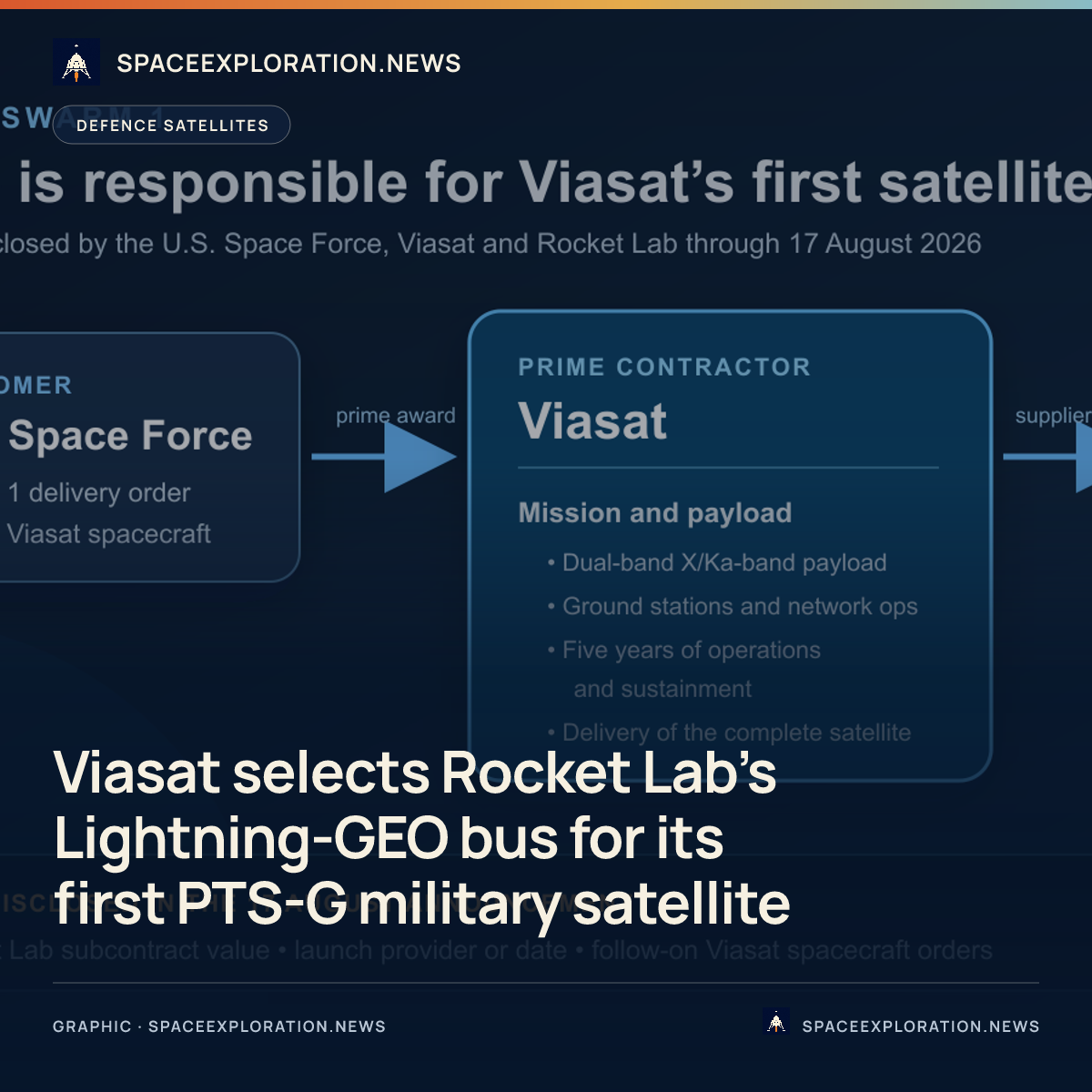
Lightning-GEO supplies the spacecraft platform around Viasat’s X/Ka-band payload. Viasat remains the Space Force prime, and no follow-on satellite order was disclosed.
Add us as a preferred source on Google Add us as a preferred source on Google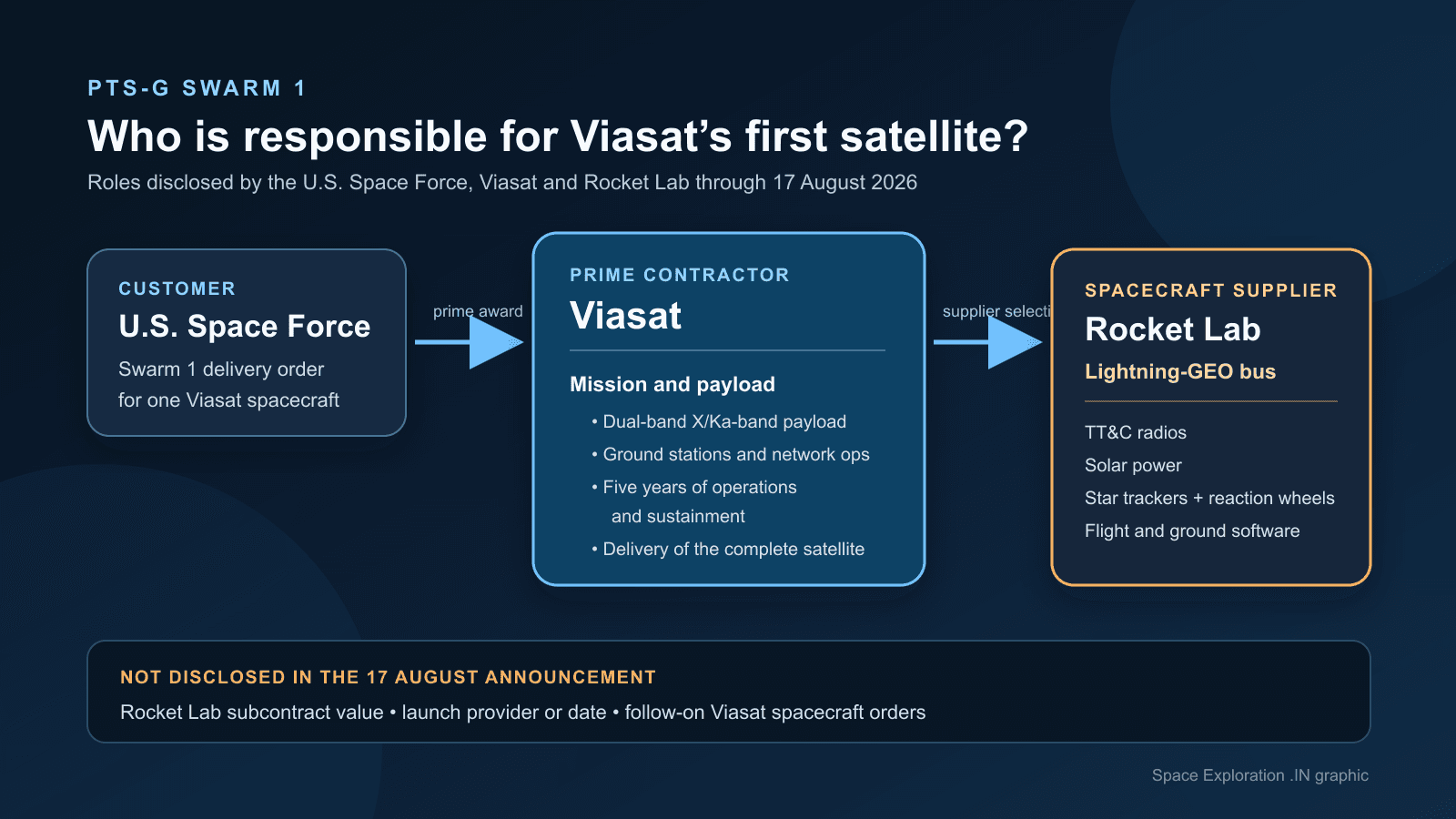
Viasat has selected Rocket Lab’s Lightning-GEO spacecraft bus for the single mini-GEO satellite it is delivering in the first production round of the U.S. Space Force’s Protected Tactical SATCOM-Global program. The August 17 announcement identifies the platform and several core spacecraft subsystems that were absent from Viasat’s June description of its prime award. It does not make Rocket Lab the prime contractor or order another PTS-G satellite.
Rocket Lab will provide a geosynchronous-orbit configuration of Lightning to host Viasat’s dual-band X/Ka-band communications payload. The companies list tracking, telemetry and command radios, solar power, star trackers, reaction wheels, and flight and ground software among the Rocket Lab equipment. Their release does not say every bus component will come from Rocket Lab, and it gives no mass, power, propulsion or production schedule for the PTS-G configuration.
What the selection settles
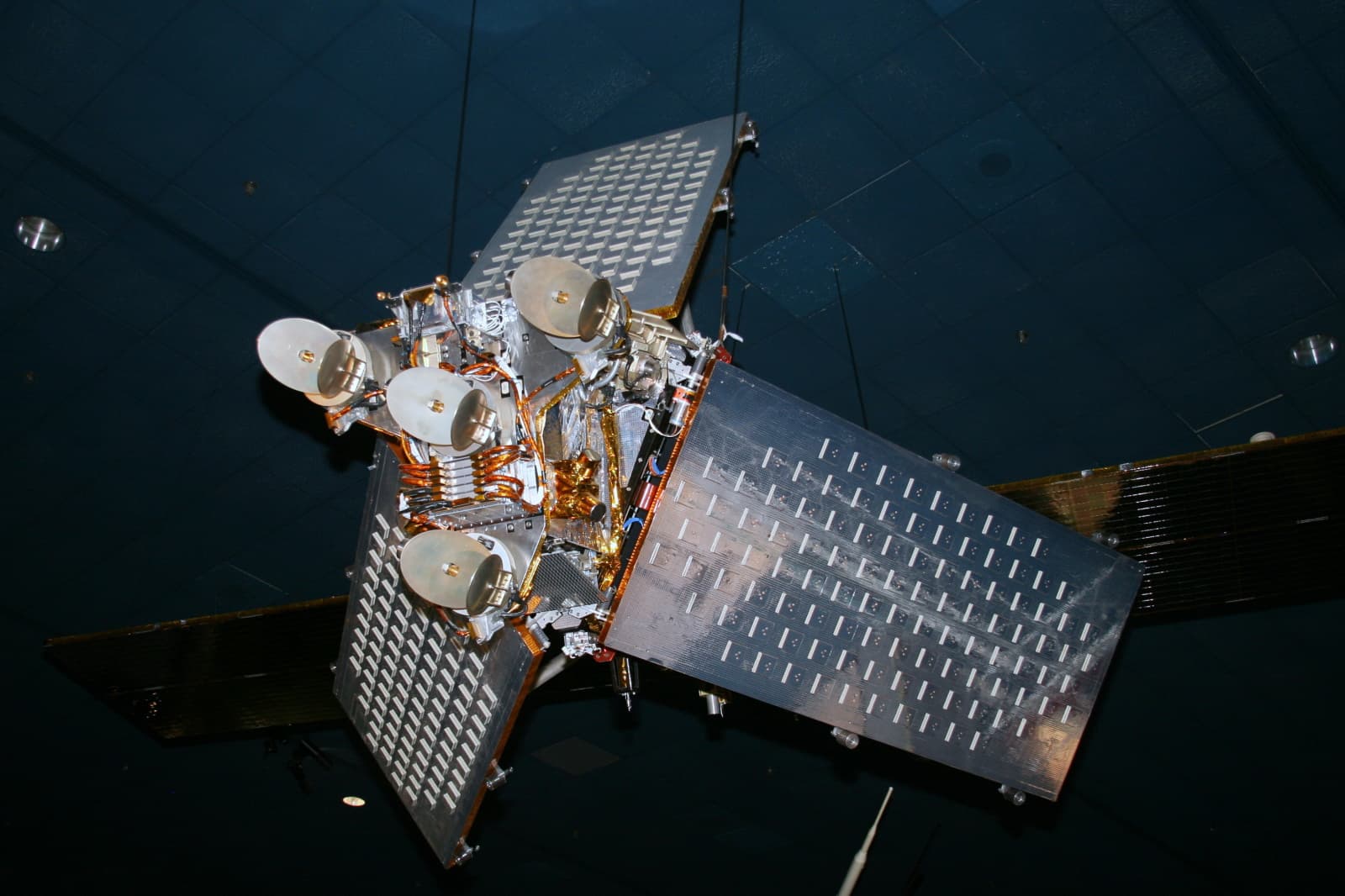
A spacecraft bus provides the supporting vehicle around a mission payload: structure, electrical power, pointing, onboard control and other services needed to keep the payload operating. For this satellite, the newly named split puts the protected communications payload with Viasat and the Lightning-GEO platform with Rocket Lab. That is a supplier relationship inside Viasat’s government contract, not a transfer of the Space Force award.
Viasat remains responsible for delivering the complete dual-band satellite system. Its June release also assigns its team the ground stations and operations support, including tracking, telemetry and command, satellite and network operations, cybersecurity, and five years of operations and sustainment. The August release again says Viasat’s government space team will lead the work. Rocket Lab is therefore responsible for a defined spacecraft-platform layer, while Viasat keeps the customer-facing mission and service obligations.
Important interfaces remain unpublished. Neither company disclosed Rocket Lab’s subcontract value, the delivery date for the bus, the launch provider, the launch date, or where final payload integration and whole-spacecraft testing will occur. The release also does not specify the propulsion system or explain how Lightning was changed for the radiation, thermal and station-keeping demands of geosynchronous orbit. Those omissions prevent a detailed comparison with Rocket Lab’s other Lightning orders.
The prime award came first
The supplier decision sits below a contract that was already in place. The joint Viasat-Rocket Lab release says Viasat received its prime award on May 22. Space Systems Command publicly announced the initial awards on June 9, and Viasat issued its own release on June 11. Viasat said the production order followed a 2025 design phase in which it developed a low-size, low-weight and low-power GEO satellite concept and associated ground architecture.
Space Systems Command awarded separate firm-fixed-price contracts to Viasat and Intelsat General Communications for the first two operational PTS-G satellites, collectively called Swarm 1. The two awards total $437.7 million and cover manufacturing, integration and test, launch, and on-orbit checkout. The command did not publish the value of each company’s contract, so the total cannot be treated as Viasat revenue or as the value of Rocket Lab’s bus work.
The Space Force describes PTS-G as a geosynchronous, transponded communications system using dedicated military Ka-band and X-band payloads. It is intended to work with existing wideband users while adding the Protected Tactical Waveform for anti-jam communications. Viasat says its order includes a manoeuvrable mini-GEO satellite and supports initial operating capability no earlier than 2029. Air & Space Forces Magazine reported that the service expected the first two satellites to launch in 2028; a launch date was not included in the August supplier release.
One spacecraft, not the rest of the swarm
The Rocket Lab selection applies to Viasat’s one awarded spacecraft. It does not cover Intelsat’s satellite, and neither company announced an order for later PTS-G vehicles. Air & Space Forces Magazine reported in June that budget documents showed four satellites planned for Swarm 1, but said it was unclear whether the Space Force would add suppliers or return to Viasat and Intelsat for the other two. The August release does not resolve that procurement question.
Lightning-GEO is not beginning from a PTS-G-only design. In May, Rocket Lab announced a separate $90 million Space Force contract to build and operate two Lightning-based GEO satellites carrying Heimdall space-domain-awareness payloads. For that program, Rocket Lab is the prime and said Lightning would be adapted for GEO thermal, radiation, propulsion and station-keeping conditions. The PTS-G arrangement reverses the contractual position: Rocket Lab supplies the bus, while Viasat is the prime and payload provider.
Naming Lightning-GEO moves Viasat’s satellite from an architecture described mainly by payload bands, manoeuvrability and ground support to a disclosed bus-and-payload pairing. The next public records needed to judge execution are the subcontract’s schedule, a completed integration and test milestone, and a launch assignment. Until then, the supported scope is one Rocket Lab bus for one Viasat-led spacecraft, with the wider PTS-G constellation still subject to later Space Force orders.
Reporting trail
Primary sources
Viasat and Rocket LabViasat Selects Rocket Lab to Build GEO Satellite for U.S. Space Force’s Protected Tactical SATCOM-Global Programglobenewswire.com
ViasatViasat Selected by U.S. Space Force to Deliver Dual-Band Satellite System under the Protected Tactical SATCOM-Global (PTS-G) Program Swarm 1 Delivery Orderviasat.com
Space Systems CommandU.S. Space Force advances satellite communications modernization, awards contracts for first global protected tactical constellationssc.spaceforce.mil
Air & Space Forces MagazineSpace Force Picks Intelsat, Viasat for Protected SATCOM Programairandspaceforces.com
Rocket LabRocket Lab Awarded $90M Contract to Build GEO Satellites Hosting Space Domain Awareness Payload for U.S. Space Forcerocketlabcorp.com
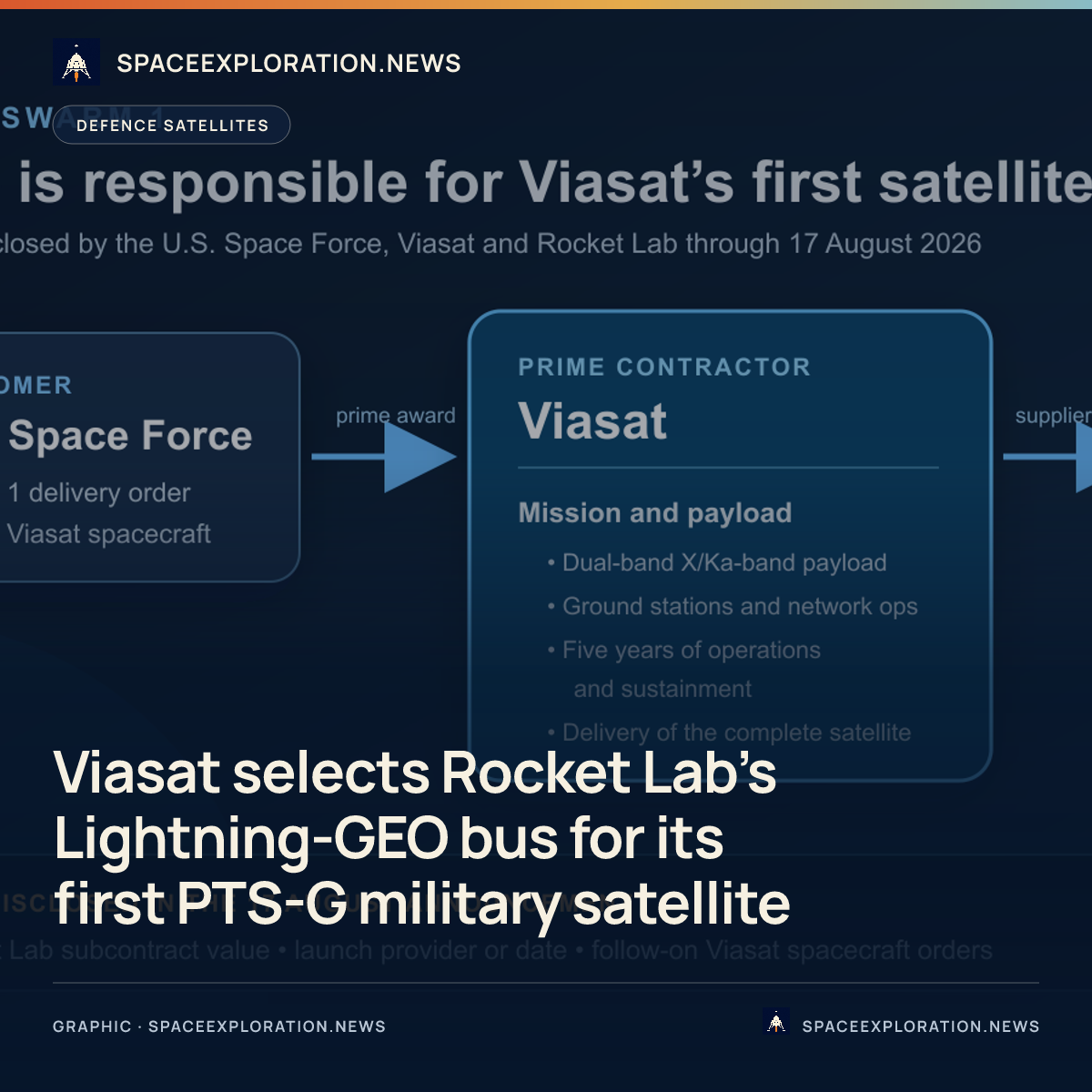
For an image post, download the card and copy this suggested caption.
Lightning-GEO supplies the spacecraft platform around Viasat’s X/Ka-band payload. Viasat remains the Space Force prime, and no follow-on satellite order was disclosed. Read the full report: https://www.spaceexploration.in/news/viasat-rocket-lab-ptsg-swarm-1-bus #SpaceExplorationNews #SpaceNews #SpaceIndustry