Navigation
Only three NavIC satellites currently broadcast navigation signals
A Rajya Sabha reply shows a four-satellite gap against NavIC’s seven-satellite design. NVS-03 is ready, but the government gave only a launch sequence—not launch dates—for rebuilding the base layer.
Add us as a preferred source on Google Add us as a preferred source on Google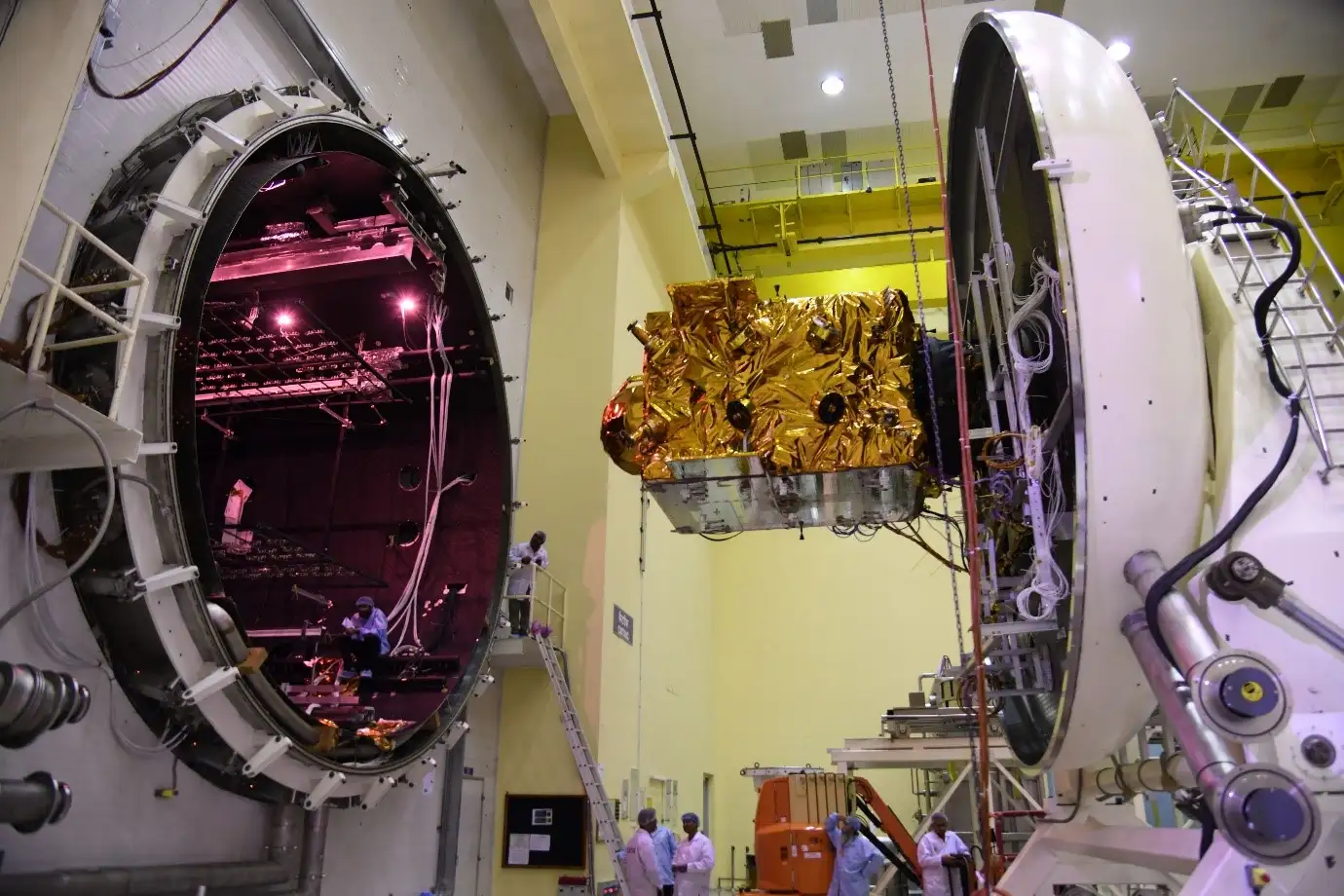
Only three satellites in India’s NavIC constellation are currently broadcasting positioning, navigation and timing signals, the Department of Space told the Rajya Sabha in an answer dated Thursday, August 13, 2026. Five other satellites are capable of one-way messaging, the reply said. Those figures describe different services: the five messaging-capable spacecraft should not be added to the navigation count. Against NavIC’s designed seven-satellite base layer, the disclosed PNT count leaves a four-satellite operational gap.
Three navigation satellites, five messaging satellites
The parliamentary answer did not name the spacecraft in each group, but ISRO’s current satellite-status list does. It marks IRNSS-1B, IRNSS-1I and NVS-01 as operational for PNT. IRNSS-1A, IRNSS-1C, IRNSS-1E, IRNSS-1F and IRNSS-1G are listed for messaging or disaster alerts. IRNSS-1D is not operational and is planned for decommissioning, while NVS-02 is listed as not operational. The list therefore reconciles the three-and-five totals without treating a spacecraft that can send alerts as a working navigation satellite.
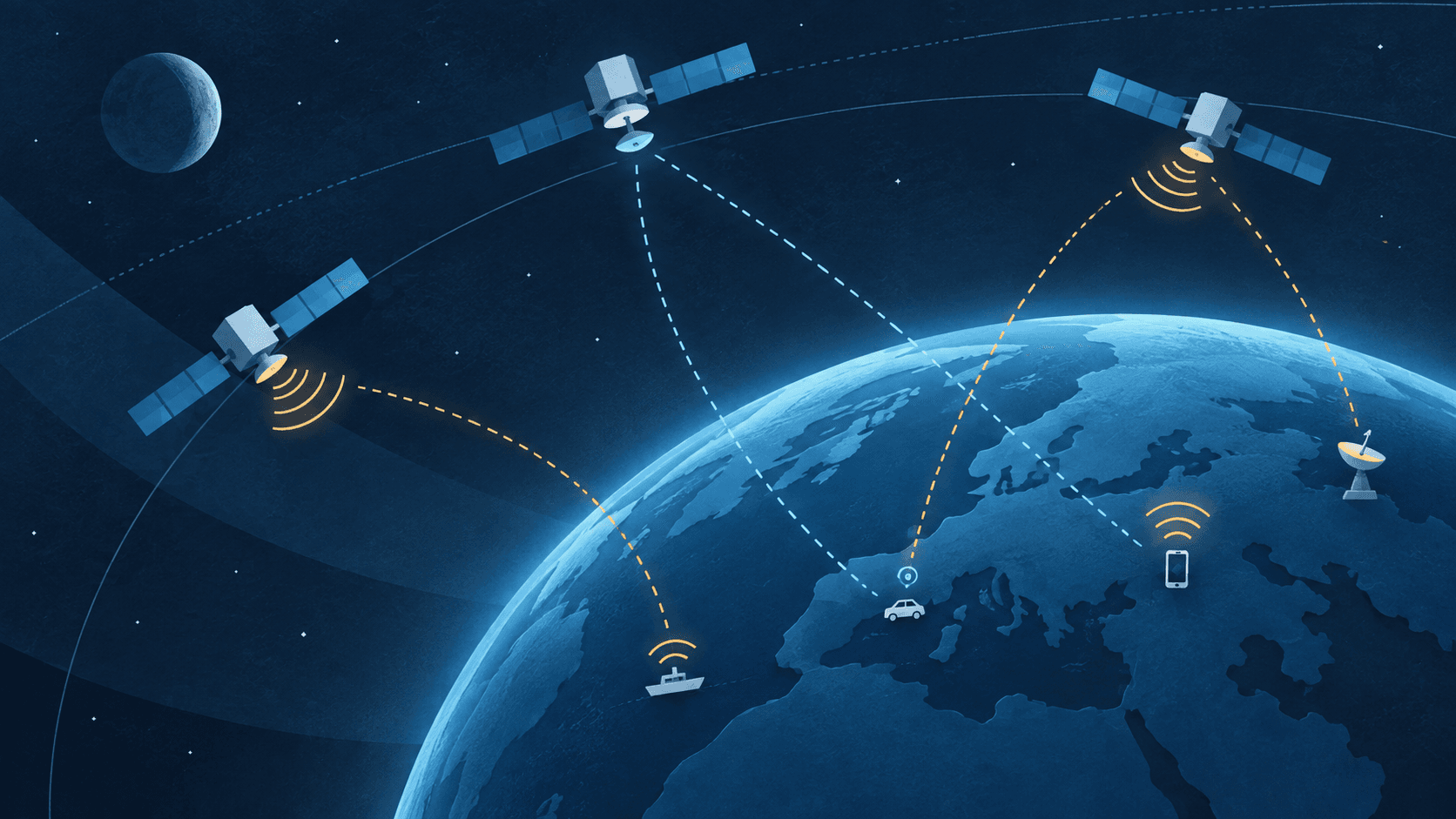
NavIC is designed around seven spacecraft: three in geostationary orbit and four in inclined geosynchronous orbits, supported by a ground network. ISRO describes its two navigation services as the Standard Position Service for civilian users and the Restricted Service for authorised users. The second-generation NVS spacecraft add a civilian L1 signal to the L5 and S-band navigation signals. That architecture is the reference point for the seven-satellite base layer the government says it intends to restore.
The messaging role still has operational value. ISRO says IRNSS-1A has been reconfigured to broadcast safety alerts in areas with poor or no terrestrial communications, including cyclone, tsunami and high-sea-wave warnings for fishing communities. The current satellite list assigns similar messaging or disaster-alert roles to four other IRNSS spacecraft. But those short-message broadcasts are a separate service from the ranging and timing signals counted as PNT, which is why the five messaging satellites do not close the navigation gap.
The clock failure that reduced the count
ISRO’s annual report section on developments during 2025 described four base-layer satellites—IRNSS-1B, IRNSS-1F, IRNSS-1I and NVS-01—as providing PNT service. That changed when IRNSS-1F completed its 10-year design life on March 10, 2026. ISRO said its procured onboard atomic clock stopped functioning on March 13, and that the spacecraft would remain in orbit for one-way messaging. The later three-satellite PNT count and five-satellite messaging list reflect that change of role.
The August parliamentary answer says the impact of failures in imported atomic clocks has been assessed, corrective measures have been taken, and corrected clocks flown from 2018 onward are working satisfactorily. It does not say how many corrected imported clocks remain in service or give a satellite-by-satellite clock inventory. The answer is therefore a current government assessment of those clocks, not a published independent audit of every unit in orbit.
India’s first indigenous space-grade atomic clocks flew on NVS-01 in May 2023 and then on NVS-02 in January 2025, according to the same reply. The government says the indigenous clocks on both satellites are working satisfactorily and will be integral to every upcoming NavIC satellite. NVS-02 nevertheless does not appear in the current PNT count. Its clock performance and its usefulness as a navigation spacecraft are separate questions because the satellite did not reach its intended final orbit.
NVS-02 was placed in an elliptical transfer orbit on January 29, 2025, but its orbit-raising operations could not be completed. An ISRO committee reported in February 2026 that a drive signal did not reach the engine’s oxidiser-line pyro valve, most likely because at least one connector contact disengaged in each of the main and redundant paths. ISRO’s satellite-status list now labels NVS-02 not operational. A functioning indigenous clock did not overcome the separate propulsion-system failure.
A replenishment sequence, not a launch calendar
The new sequence starts with NVS-03, which the August answer says is ready for launch. NVS-04 and NVS-05 are to follow, then one more satellite is planned to complete the seven-satellite base layer. ISRO had originally described NVS-01 through NVS-05 as a five-spacecraft second-generation series. The reply does not name the additional spacecraft after NVS-05, identify its configuration or say whether it will receive another NVS designation.
An earlier ISRO annual report identified the NVS-03 mission as GSLV-F18 and tentatively placed it in the fourth quarter of the 2025–26 financial year. That quarter ended on March 31, 2026, and the August answer still describes NVS-03 as ready for launch. The earlier tentative window has therefore passed. The newer answer gives no replacement launch date for NVS-03, no dates for NVS-04 or NVS-05, and no calendar date for restoring the full base layer.
If the three current PNT satellites remain operational and each of the four spacecraft in the disclosed sequence joins the navigation service, the base layer would return to seven. That is an inference from the government’s count and sequence, not a guarantee. The answer provides no commissioning schedule, and it does not forecast how long the older IRNSS-1B and IRNSS-1I satellites will remain available while the replacements are launched and tested.
What remains unknown
The parliamentary reply does not quantify the effect of operating with three PNT broadcasters on service availability, accuracy or redundancy, and it gives no user-impact assessment. ISRO’s annual report says the NavIC ground segment is fully functional, but that does not supply the missing space-segment signals. The operational counts and replenishment order in this article come from government and ISRO documents; independent in-orbit signal verification was not available. The next concrete milestones are an NVS-03 launch and confirmation after commissioning that it has joined PNT service.
Reporting trail
Primary sources
Rajya Sabha, Department of SpaceUnstarred Question No. 3009: Operational Status of NavIC Constellationsansad.in
Indian Space Research OrganisationSatellites launched so far: status listisro.gov.in
Indian Space Research OrganisationIRNSS-1F successfully completed its mission life of 10 yearsisro.gov.in
Indian Space Research OrganisationAnnual Report 2025–2026isro.gov.in
Indian Space Research OrganisationNVS-02 Spacecraft: On-Orbit Observations and Apex Committee Recommendationsisro.gov.in
Indian Space Research OrganisationNVS-02: Advancing India’s Regional Navigation Capabilitiesisro.gov.in
Indian Space Research OrganisationSatellite Navigation Services (accessed August 17, 2026)isro.gov.in
For an image post, download the card and copy this suggested caption.
A Rajya Sabha reply shows a four-satellite gap against NavIC’s seven-satellite design. NVS-03 is ready, but the government gave only a launch sequence—not launch dates—for rebuilding the base layer. Read the full report: https://www.spaceexploration.in/news/navic-three-navigation-satellites #SpaceExplorationNews #SpaceNews #SpaceMissions