Lunar infrastructure
Northrop outlines three lunar demos using HALO systems; no NASA award disclosed
The company says power, data and mechanical interfaces can be reused after Gateway’s cancellation. It does not identify the flight hardware, funding, launch dates or landing providers.
Add us as a preferred source on Google Add us as a preferred source on Google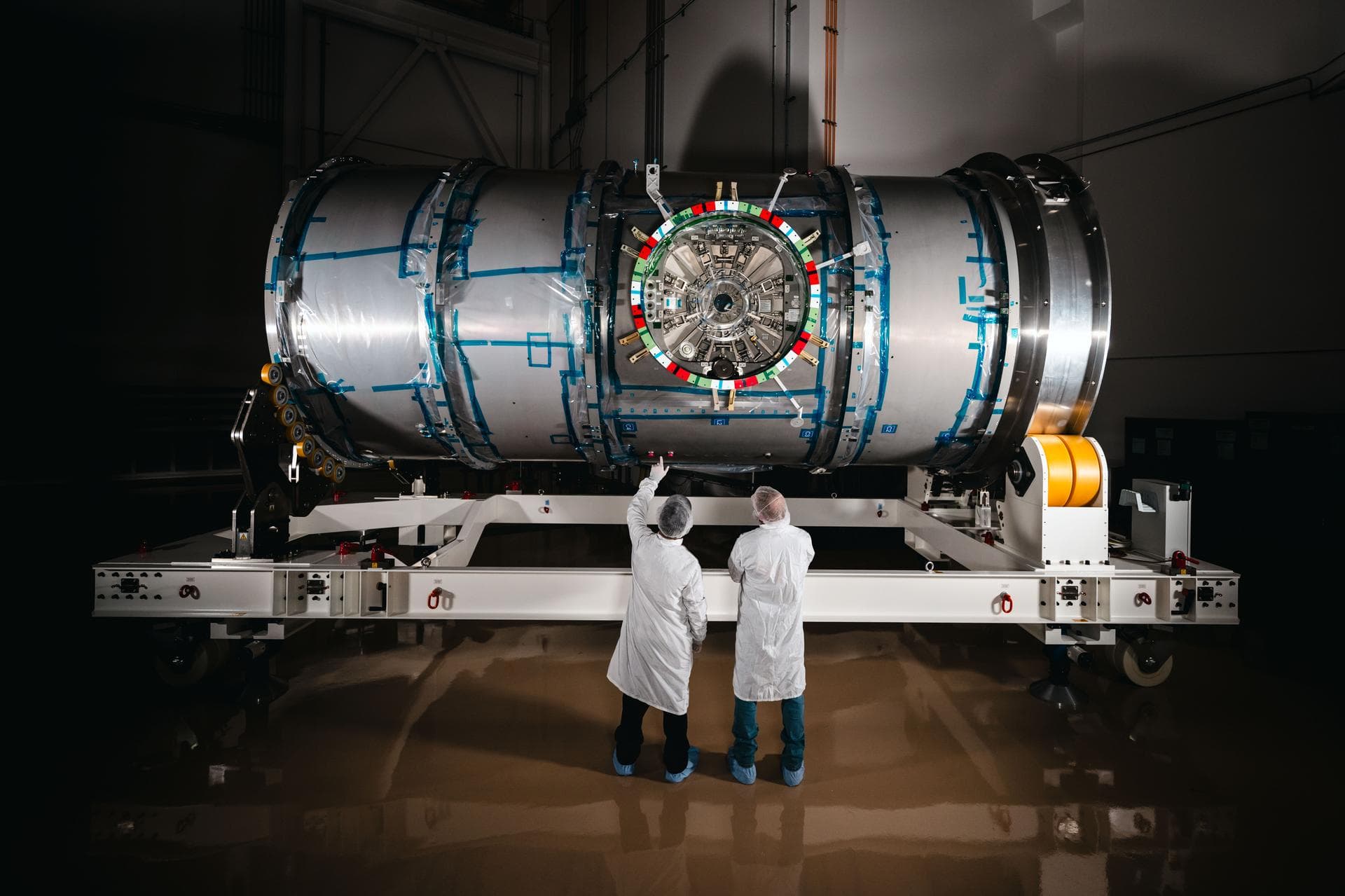
Northrop Grumman says it is developing three Lunar Infrastructure Demo missions using hardware and technology from the stopped Gateway Habitation and Logistics Outpost project. The August 4 company release names LID 1, LID 2 and LID 3 and says they would support NASA’s Moon Base effort. It does not announce a NASA selection, contract, price, launch date, lander, landing site or division of hardware among the three proposed missions.
Northrop describes the common technical scope as surface power, thermal control, autonomy, communications and services for hosted payloads, with systems intended to remain powered, protected and connected through lunar night and shadow. It identifies HALO’s power, data and mechanical interfaces as the reusable foundation. Space.com reported on August 13 that neither NASA nor the company had given a target timeline. Northrop does not explain what distinguishes one LID mission from the next.
Three names, no three mission designs
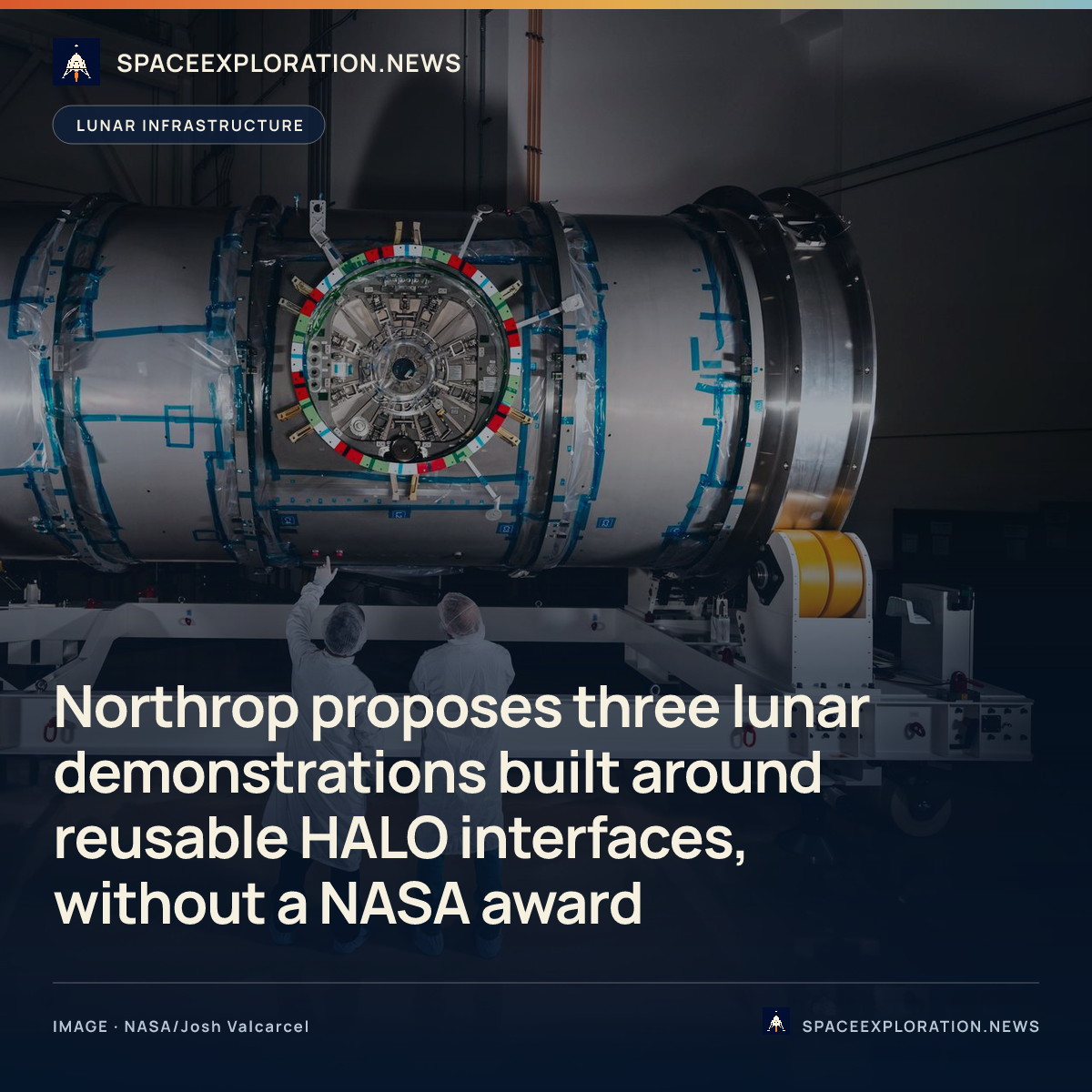
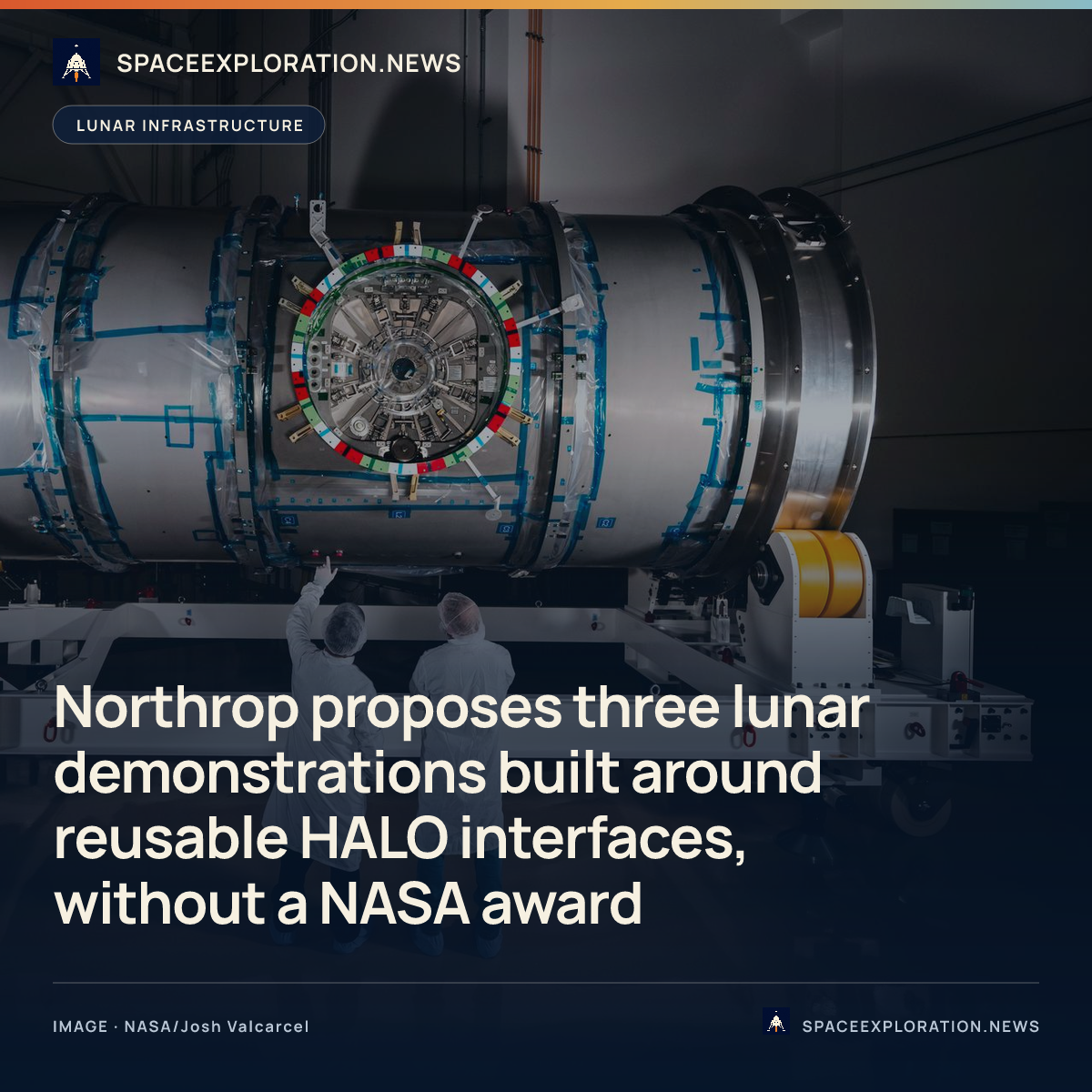
Reuse can mean flying physical components already built for HALO, or applying its designs and interface standards to new surface systems. Northrop’s release says both hardware and technologies derived from HALO are involved, but it does not provide a parts list. It does not say the cylindrical pressure vessel will go to the lunar surface, identify which electrical boxes or mechanical fittings will fly, or map any component to LID 1, LID 2 or LID 3.
NASA’s pre-cancellation description shows how much equipment HALO encompassed. The orbital habitat was to receive propellant and electrical lines, radiators, life-support racks, power equipment, flight computers, avionics and docking mechanisms. It was designed for command and control, data handling, energy storage, power distribution and thermal regulation. The new LID release names some related functions, but does not say that all or any particular item from that list has been assigned to a surface flight.
The company describes the HALO technologies as ready to fly, but the release supplies no qualification report, configuration, mass, thermal margin or completed test result for the LID systems. Its accompanying image is an artist’s rendering of three lander-like units, not a photograph of completed flight hardware. The NASA Inspector General’s report on corrosion in HALO’s primary structure does not establish that the proposed interfaces are unusable; it does mean readiness for the whole module cannot be inferred from the company’s broad description.
Gateway’s cancellation changed the destination
NASA’s February 2026 Artemis reformulation removed Gateway as a staging location for lunar-surface missions and shifted the agency towards a permanent Moon Base, according to the Inspector General. NASA issued a stop-work order on HALO in April. A May workforce directive then placed Gateway work relevant to the surface, along with lunar infrastructure and habitation, under the new Moon Base programme. That policy makes reuse possible, but it is not a mission award to Northrop.
The stopped contract had already changed substantially. NASA began with a $187 million preliminary-design award in 2019, then converted HALO to a firm-fixed-price arrangement whose combined value was $1.3 billion with delivery planned for May 2025. In September 2024, NASA moved the work to a cost-plus-award-fee contract valued at $1.8 billion and shifted delivery to October 2026. By the April 2026 stop-work order, the contract value had reached $1.9 billion. These are contract values reported by the Inspector General, not a statement that the full amount was spent.
Schedule evidence was also poor. The Inspector General said earlier analyses put the chance of meeting HALO launch-readiness dates below 1 per cent and then at 0 per cent. Widespread corrosion found in the primary structure contributed to Northrop’s estimated delivery moving to July 2028. Using recent schedule trends, the watchdog projected delivery in July 2031 and said Gateway would not have been operational before 2032, while noting that limited data prevented a complete HALO cost projection.
NASA’s response to the watchdog agreed that HALO and the other reviewed systems had faced major challenges involving contractor performance, changing requirements, supply chains and workforce management. The agency also said the projections relied on performance under an architecture it had replaced. As of June 24, however, the Inspector General said decisions on whether and how much of the terminated hardware could be repurposed were not final. Northrop’s August release supplies a company reuse plan, not a published NASA disposition decision.
NASA awards look different
NASA’s May 26 Moon Base announcement shows what an agency commitment looks like in the public record. It named landers and payloads for Moon Base I, II and III, gave target launch periods and disclosed awards of $219 million and $220 million for two rover providers and $188 million for a Blue Origin delivery task order. The release did not mention the LID missions. Because it predates Northrop’s announcement, that absence cannot rule out a later transaction; it does show the award details missing from the company’s release.
NASA also has an active Moon Base demonstrations solicitation. The NextSTEP-3 Appendix B notice seeks industry proposals for demonstrations, risk reduction and studies, and says awards will focus on integrated concepts rather than component development alone. NASA extended the white-paper deadline to August 24. Its topic list overlaps Northrop’s interests, including infrastructure, power, communications and autonomy, but Northrop does not say LID is a response to that notice. Similar subject matter is not evidence of a submission or selection.
What would establish a mission
The next decisive record would be a NASA selection or contract that names Northrop and a LID mission, followed by a flight configuration: which existing HALO components will be removed or reproduced, their qualification status, a delivery vehicle, a lunar lander, a landing site and a schedule. Until then, the supported conclusion is narrower. Northrop has proposed three surface demonstrations around systems developed for an abandoned orbital module, but the public documents do not establish that NASA has bought them or that any particular piece of HALO will reach the Moon.
Reporting trail
Primary sources
Northrop GrummanNorthrop Grumman’s Lunar Infrastructure Demos to Help Build NASA’s Moon Basenews.northropgrumman.com
Space.comNASA's canceled lunar space station tech will help build the Artemis moon basespace.com
NASA Office of Inspector GeneralNASA’s Management of Programs and Projects after Mission Termination—Canceled or Repurposed Artemis Campaign Systemsoig.nasa.gov
NASAA Message From Administrator Jared Isaacmannasa.gov
NASANASA Provides Update on Moon Base Rovers, Landers, Missionsnasa.gov
NASALunar Space Station Module for NASA’s Artemis Campaign to Begin Final Outfittingnasa.gov
NASANextSTEP-3 B: Moon Base Demonstrationsnasa.gov
For an image post, download the card and copy this suggested caption.
The company says power, data and mechanical interfaces can be reused after Gateway’s cancellation. It does not identify the flight hardware, funding, launch dates or landing providers. Read the full report: https://www.spaceexploration.in/news/northrop-halo-lunar-infrastructure-demos #SpaceExplorationNews #SpaceNews #SpaceMissions